🚨 Lab 10a: Alarm Systems
It is important that you read and understand these principles of safe work with gases in Lab 10a. You will have to confirm that you read and understood these instructions as part of your onboarding.
Low oxygen level alarm
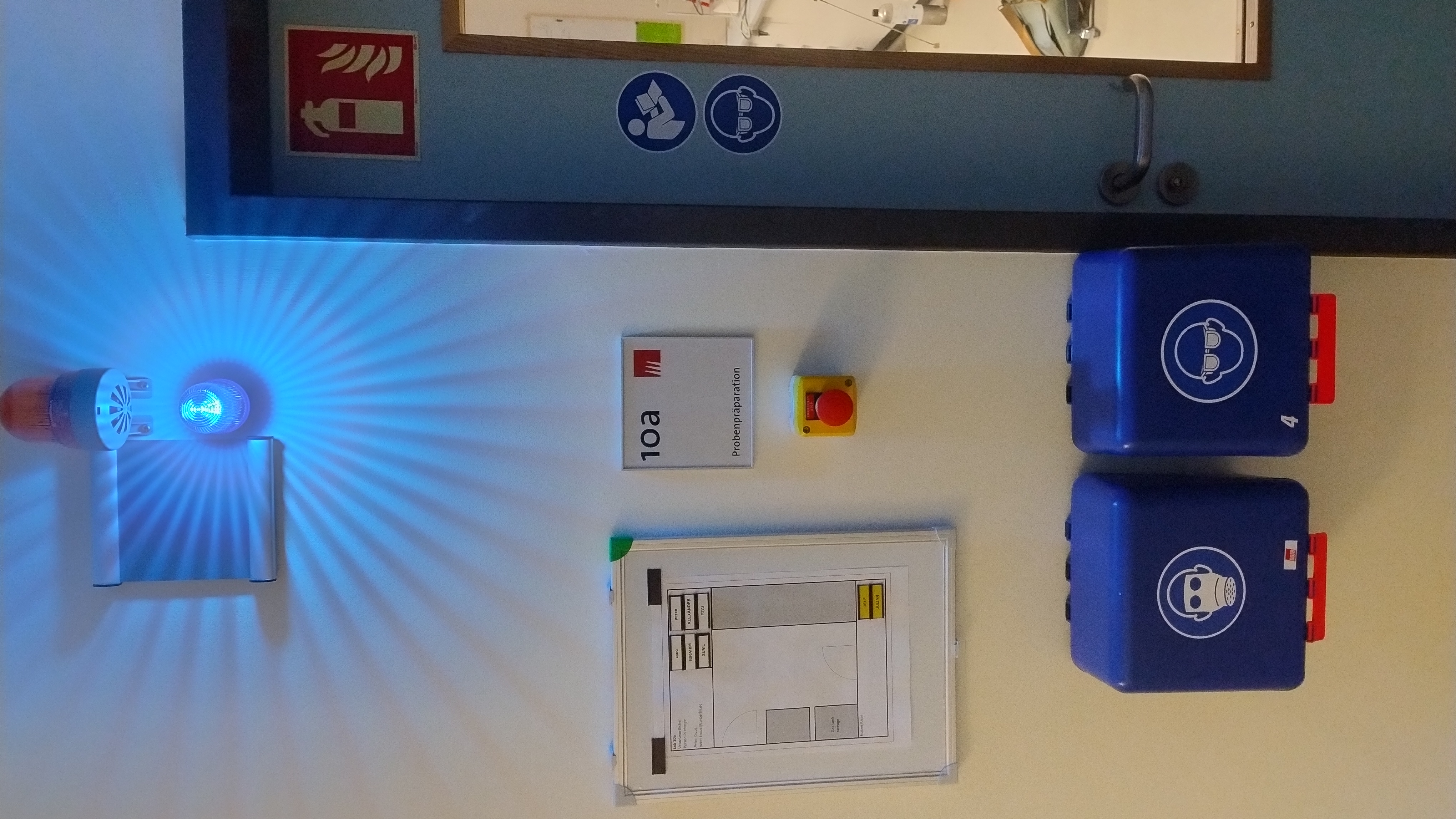
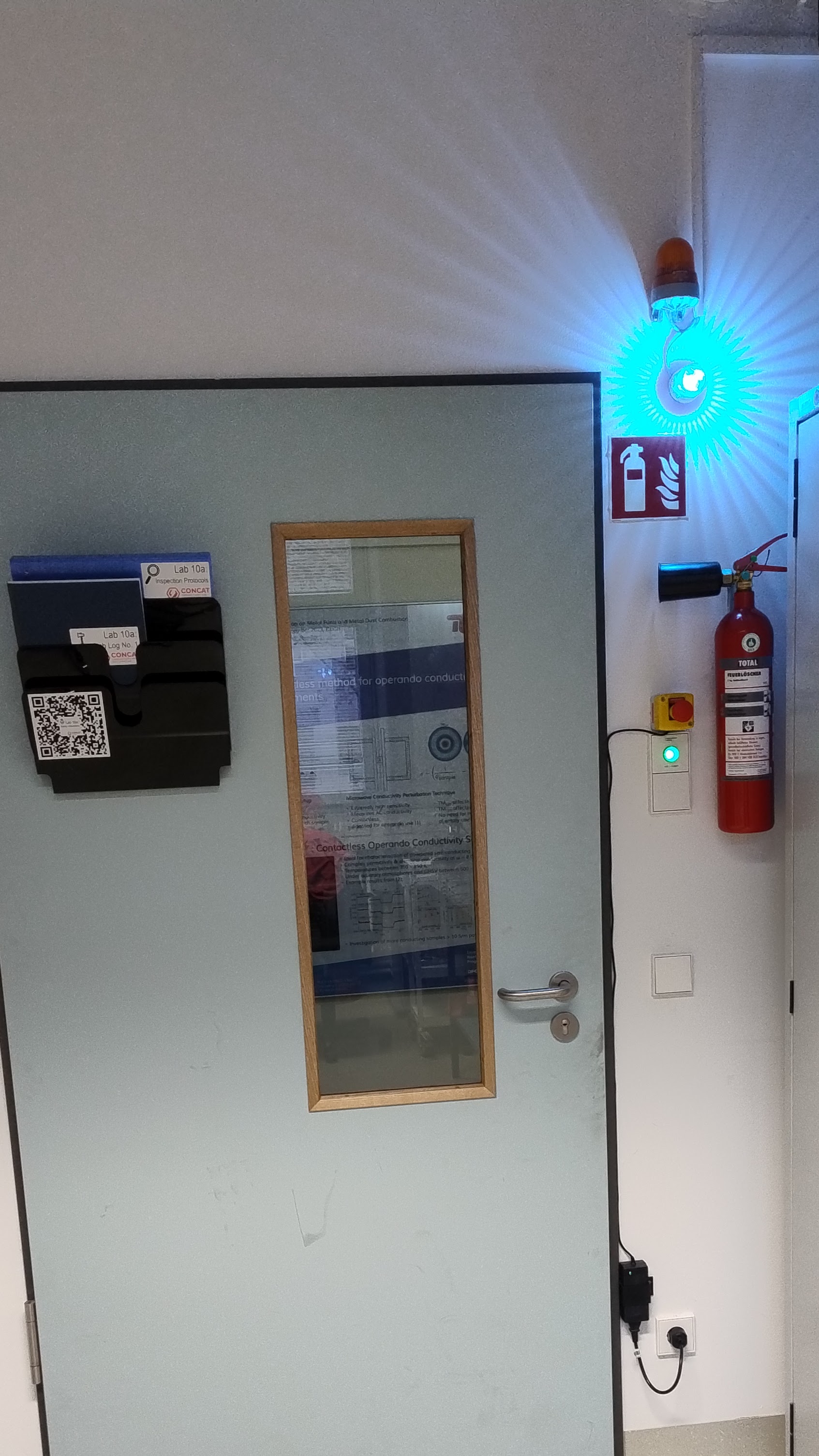
The orange beacons outside and inside the lab are connected to the oxygen level sensor in the lab. The low oxygen level alarm will trigger in case a dangerously low concentration of oxygen, below 17%, i.e. when there is a risk of asphyxiation. The alarm is equipped with both an alarm light and a siren.
If you are inside the lab:
- Shut off any open gas supply (house or gas cabinet) using the wingnut valves on the pressure regulators.
- If in use, trigger the gas cabinet shut-off.
- Leave the lab immediately.
- Note the date and time of the event.
- Notify Peter and Delf or Kai as soon as possible.
If you are outside the lab:
- If the toxic gas caution light is on, trigger the gas cabinet shut-off.
- Do not enter the lab without a gas mask if the toxic gas caution light was on.
- Check for people inside the lab:
- if responsive, instruct any personnel to leave the lab immediately,
- if unresponsive, you may attempt to remove the person from the lab or call for help first; seek medical attention as soon as possible.
- Note the date and time of the event.
- Notify Peter and Delf or Kai as soon as possible.
In both cases, do not forget to document the event in the Lab Log, once safe to do so.
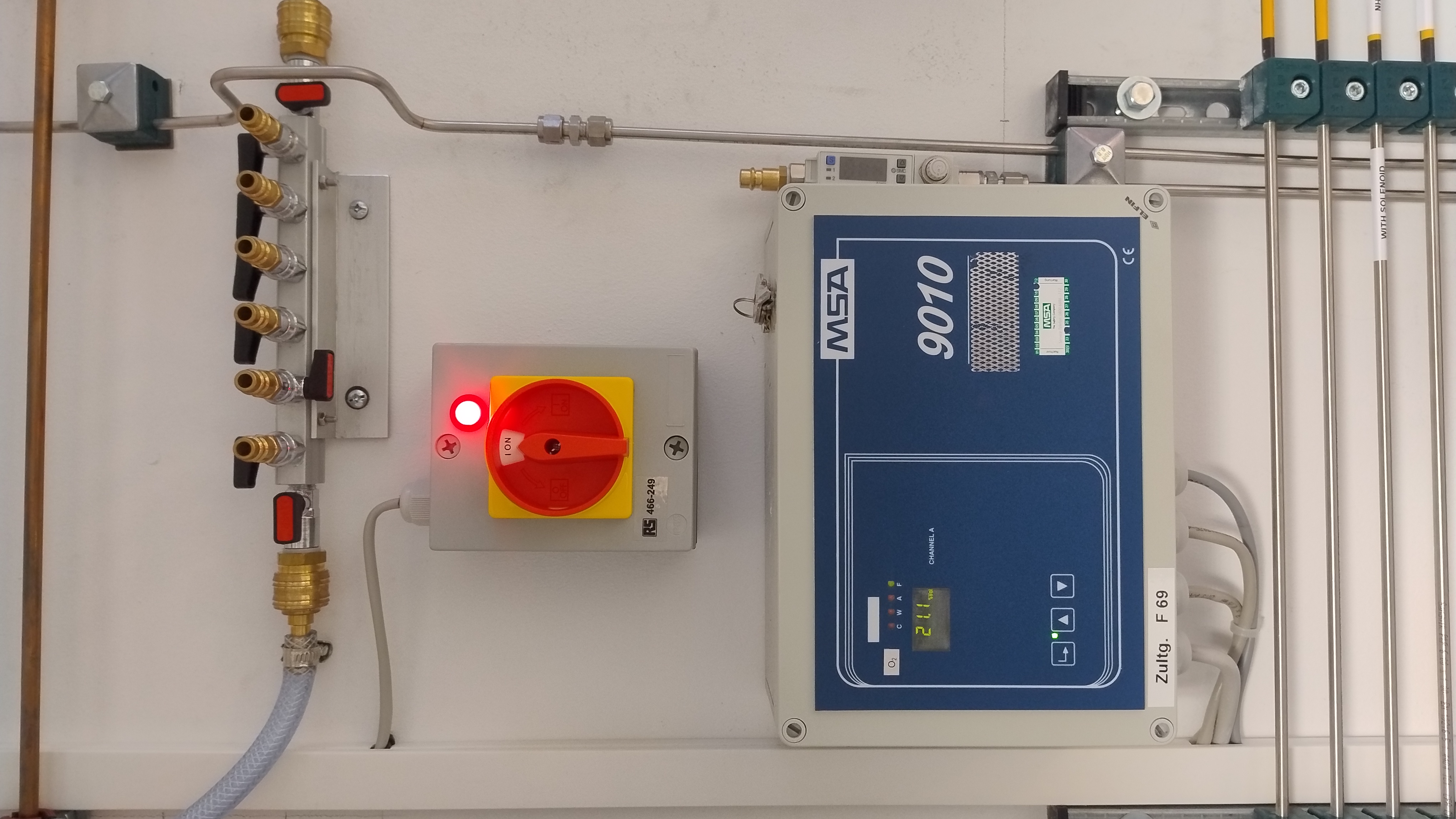
Once the concentration of oxygen returns to safe levels (i.e. above 17%), the alarm will be silenced and the light will stop blinking. The alarm control unit will, however, remain in an alarm state that has to be reset manually by pressing any of the arrow buttons on the alarm control unit (see Figure 3).
Re-entry into the lab after a low oxygen level alarm is only permitted with Peter’s or Delf’s approval. Return to work in the lab must be explicitly approved by Peter.
Gas cabinet shut-off
The blue beacons inside and outside of the lab are connected to the gas cabinet shut-off circuit. When the circuit is on, the toxic gas caution light indicates that the solenoid valves installed on top of the ventilated gas cabinet are open. This means, that the gases labelled blue in the list gases connected to the gas cabinet lines are available at the pressure reducers (link to photo).
If the power to the circuit is cut, the solenoid valves are shut. This means no more of the gases labelled blue will flow out of the gas cabinet (whether intentionally or as a leak). The power to the circuit can be cut in the following ways:
- by using the main circuit on-off switch shown in Figure 3,
- by pressing the gas cabinet shut-off emergency buttons on the outside (Figure 1) or inside (Figure 2) of the lab,
- by disconnecting the power supply (located next to the door on the inside of the lab) from the wall.
Do not hesitate to press the gas cabinet shut-off buttons and leave the lab. The lab air exchange will take care of any toxic gas released.
Do not forget to note down any incidents into the Lab Log.
Re-entry into the lab after a low oxygen level alarm is only permitted with Peter’s or Delf’s approval. Return to work in the lab must be explicitly approved by Peter.